
Dolores County Criminal Court Cases
Dolores Combined Court keeps the county's main criminal case files within Colorado's 22nd Judicial District. District Court hears felonies. County Court handles misdemeanors, traffic matters, and early felony proceedings such as advisements and preliminary work. Both operate from 409 N. Main Street in Dove Creek, so the same clerk contact can route a request to the right division.
The official Dolores County trial-court page shows the courthouse and its court-service links.
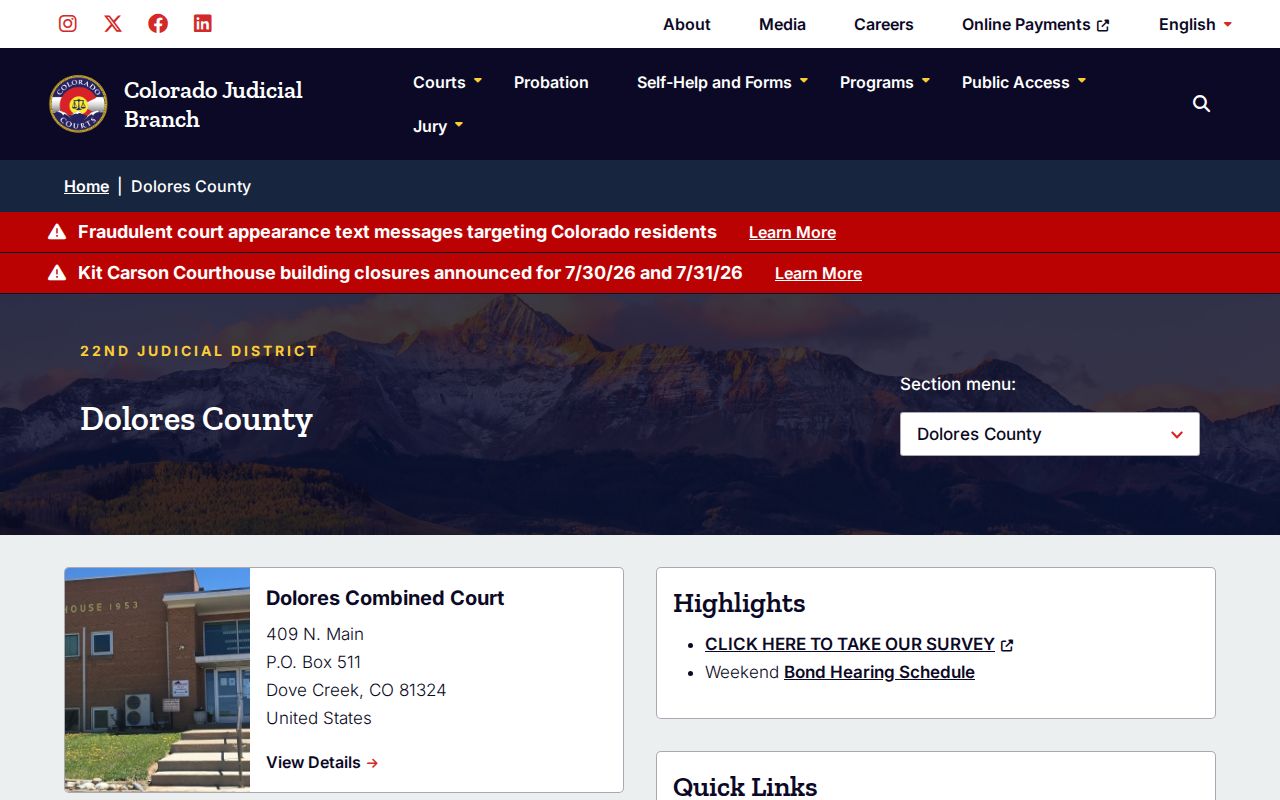
The courthouse is the local source for county and district case papers, while its online page supplies current access and schedule information.
A case file begins after a prosecutor files a complaint or information. It can contain far more than the arrest record that came before it. The court file tracks filed charges, hearings, pleas, motions, rulings, disposition, and sentence. It does not merely repeat the booking charge. For an event that began with an arrest, use the Dolores County arrest lookup to understand the custody record, then use the court file to learn what prosecutors and the judge did.
Dolores Criminal Courts by Level
Choosing the court is the first local test. A felony belongs in Dolores District Court, while a misdemeanor usually belongs in Dolores County Court. Rico ordinance cases may remain with Rico Municipal Court. Dove Creek municipal matters should be confirmed with Town Hall because no separate public town case portal was found.
| Court channel | Dolores County case role | Contact route |
|---|---|---|
| Dolores District Court | Felonies and district matters | Combined Court clerk |
| Dolores County Court | Misdemeanors, traffic, early felony stages | Combined Court clerk |
| Rico Municipal Court | Rico ordinance matters | Town municipal-court page |
| Dove Creek municipal channel | Town ordinance matters | Town Hall confirmation |
This split explains why a ticket may not appear in the state docket. Municipal records and state-court records are different collections even when they arise from conduct in Dolores County.
Searching Dolores County Case Records
Start with the official Dolores-filtered docket. It is free and useful for scheduled events, but it is a calendar rather than a complete register of actions. Expand the date range and check the location filter when a hearing is not visible.
The official interface shows why location and date matter. The source for the image below is the Colorado Judicial Branch docket search.
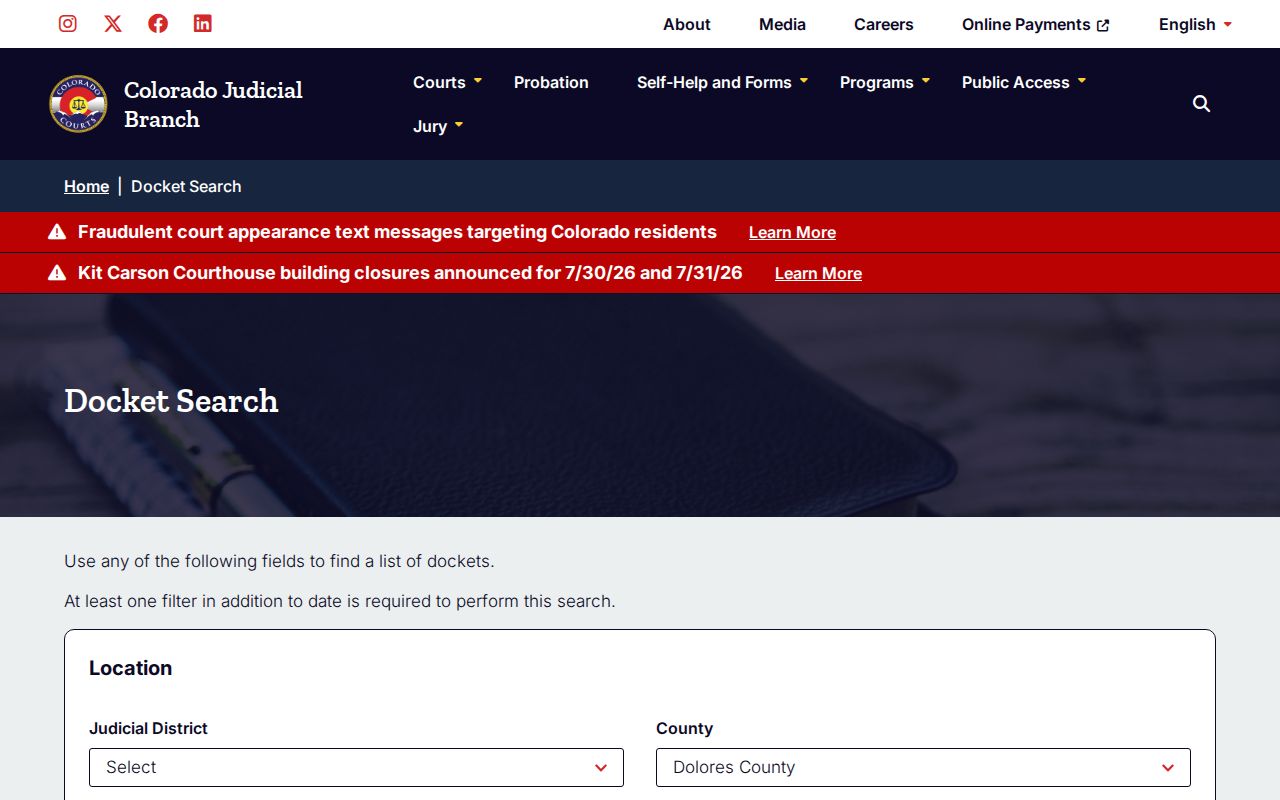
The screen is a sound first stop for a Dolores County hearing, not proof that every document is online.
| Search field | Use | Limit |
|---|---|---|
| County or location | Select Dolores | Municipal files may be absent |
| Date range | Find scheduled events | Not a full case-history range |
| Result pages | Move through calendar entries | Documents are not freely attached |
| Case number | Identify the court file | Use the clerk for full copies |
Dolores Dockets Are Not Files
A docket result may show time, duration, case caption, case number, event type, county, courtroom, and a status marker. It generally does not expose all pleadings, exhibits, financial entries, sentence terms, or full party data. No free document download was observed from the calendar list.
If the docket shows no event, do not assume the case never existed. The date window may be too narrow, the case may be older, the caption may have changed, or the matter may be municipal. Ask the Dolores clerk to search by case number, approximate year, and party name. State whether a plain or certified copy is needed and ask about archive retrieval and delivery. Local copy fees were not confirmed in the research, so obtain a current quote before ordering.
Note: A calendar entry confirms a scheduled court event, while the clerk's file supplies the official papers and final orders.
Inside a Dolores County Case File
The file follows the court's work, not just the initial accusation. Filed charges can differ from intake charges because prosecutors review reports and decide what the evidence supports. Later entries may show a plea, trial result, dismissal, deferred judgment, sentence, or sealing order.
| Case number | Identifies the court type, year, and individual file. |
|---|---|
| Charging paper | States the offenses formally filed in court. |
| Hearings | Lists advisements, arraignments, pretrial settings, trial, and sentencing events. |
| Motions and orders | Records requests to the judge and the court's rulings. |
| Disposition | Shows dismissal, acquittal, plea, conviction, or another final result. |
| Sentence | May state custody, probation, fines, or other court-ordered terms. |
Terms matter. A disposition is the outcome of a charge. An arraignment is the stage at which the defendant is advised and enters a plea. A deferred judgment postpones entry of judgment under set conditions and may lead to dismissal if those terms are met.
Older Dolores Court Case Copies
For a file that is missing from the online calendar, contact the clerk at 970-677-2258 or DoloresClerk@judicial.state.co.us. Provide the case number if known, an approximate year, the party name, and the exact document sought. Clear details help staff distinguish a docket sheet from a complaint, order, disposition, or certified case record.
Dolores Combined Court
409 N. Main Street
Dove Creek, CO 81324
970-677-2258
DoloresClerk@judicial.state.co.us
The Colorado court record request form lists document choices and the statewide fee framework. Ask the local clerk to confirm present copy charges and any archive cost. Do not send payment based on an old fee quote.
Before ordering, identify the purpose of the copy. A docket sheet can outline case events, while a disposition or sentencing order answers a narrower outcome question. A certified copy carries the clerk's authentication and may cost more than a plain copy. Archive retrieval can also affect timing. Because no stable Dolores-specific fee schedule was located, the clerk should confirm the amount, accepted payment method, and whether delivery can be made by email or mail. That short exchange prevents an incomplete request and avoids paying for a full file when one order supplies the needed result.
How a Criminal Case Moves
A Dolores County criminal court case changes as police, prosecutors, the clerk, and the judge complete separate tasks. The usual public path is:
Charges Filed → Arraignment → Pretrial → Plea or Trial → Disposition → Sentencing
Not every case reaches each point. A prosecutor may decline or dismiss a charge. A plea can end the trial path. An acquittal ends the charge without a conviction, while sentencing follows a conviction or qualifying plea. The court file is the best source for the filed charge and outcome because an arrest report freezes an earlier point in the process.
- Complaint or information
- The formal paper that starts or states the criminal charges.
- Disposition
- The result recorded for each filed charge.
- Certified copy
- A clerk-authenticated copy used when proof of the official record is needed.
Dolores Cases Routed Through Cortez
Dolores County's rural court schedule makes shared service more than an administrative detail. The Combined Court page directs some closure-period needs to Montezuma Combined Courts at 865 N. Park Street, Suite 100, Cortez. That office is part of the same 22nd Judicial District, but it does not turn every Dolores file into a Montezuma case.
The Montezuma County court page illustrates the district's fallback channel.
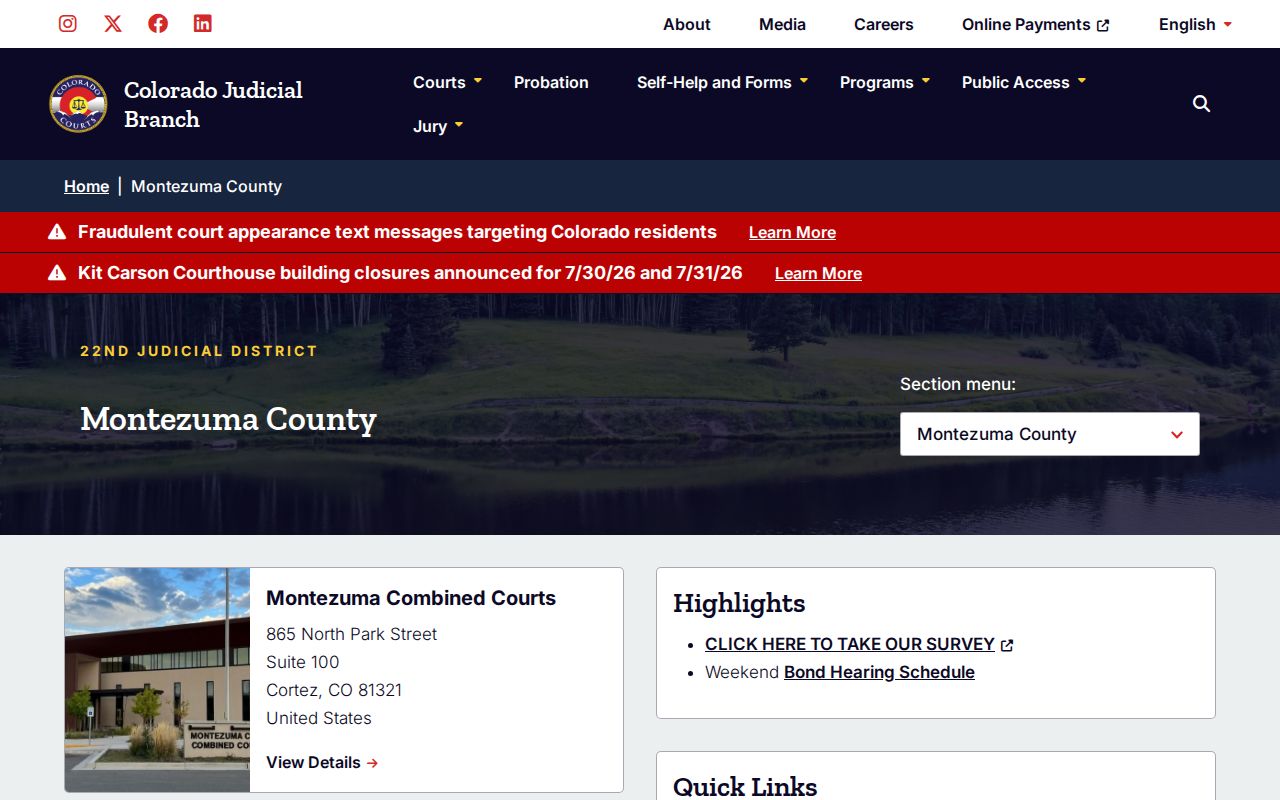
Confirm which counter holds the requested record before driving. The Dolores clerk remains the primary source for a Dolores case file.
Case Record Access & Restrictions
Colorado court files are generally open, but access is not absolute. A judge may seal a record, and laws protect juvenile material, victim addresses, minor identities, medical details, and security-sensitive information. A public calendar can also omit data that remains available only through a proper clerk request.
The Colorado Criminal Justice Records Act, C.R.S. sections 24-72-301 through 24-72-309, governs many criminal-justice records. Court control and specific sealing or juvenile laws can still limit release. If a Dolores court outcome and a CBI history disagree, obtain the disposition from the clerk, then use CBI's correction process. The court proves what it ordered. CBI controls the repository entry.
Note: Sealed records are not restored to public view merely because an old third-party copy still exists.
Federal Cases Outside Dolores Court
Federal offenses arising in Dolores County belong to the U.S. District Court for the District of Colorado, not Dolores Combined Court. Search federal dockets through PACER after account registration. PACER uses the federal judiciary's current per-page fee rules and a quarterly low-usage waiver threshold.
The federal search layer has a distinct interface and account model.
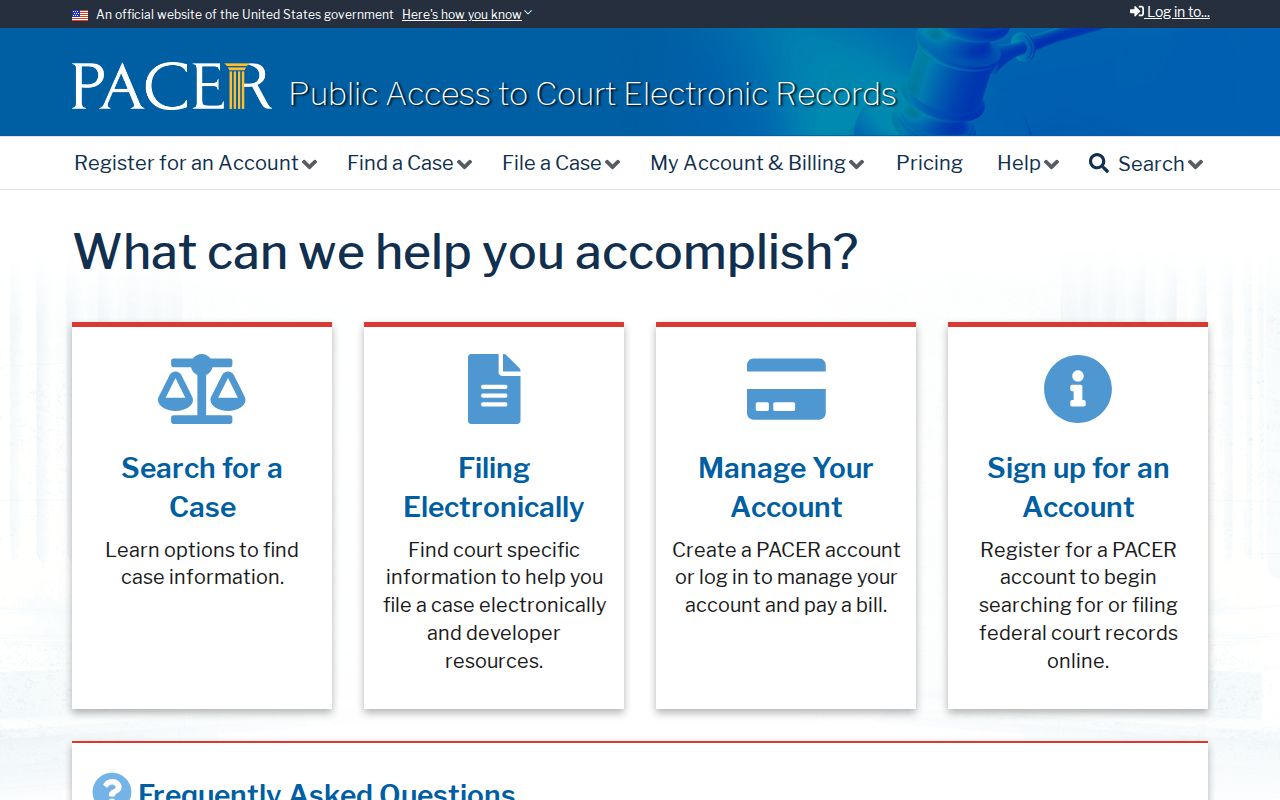
PACER should be used only when the matter is federal. It will not replace the Colorado docket for Dolores County or district charges.