
Sex Offender Checks in Dolores County
The Colorado Sex Offender Registry is the main public channel for Dolores County. The Colorado Bureau of Investigation, or CBI, maintains that system. The Dolores County Sheriff's Office performs local registration and verification. Searchers can therefore use the state portal for a public result, then call the sheriff when a local address, status, or compliance concern needs official follow-up.
The registry is a safety and awareness tool, not a complete list of all people who have ever been convicted of a sex offense. Whether a person appears depends on the offense, the legal registration duty, public-release rules, any order ending that duty, and how current the reported data is. Start with enough detail to distinguish people who share a name. Then read the full profile rather than relying on a result-card photo or address alone.
Colorado Uses Statutory Categories
A common mistake is to force Colorado records into a simple public Tier I, Tier II, and Tier III chart. Colorado law instead uses offense and statutory categories, along with the Sexually Violent Predator designation. The public registry may show the qualifying offense and status, but the controlling duty comes from Colorado statutes and the person's case.
Plain terms: Federal SORNA tiers should not be substituted for Colorado's own registration labels. Check the live law and the actual court record for a specific case.
Frequency and duration can turn on the offense, disposition, age, and other statutory facts. Some duties last for life. Other people may petition a court to discontinue registration after the required period and conditions are met. That is why an old conviction alone does not answer whether a profile should be public today.
How to Search the Colorado Sex Offender Registry
The official search accepts both identity and place fields. A place search is useful for community awareness in Dove Creek, Rico, and rural Dolores County. A name search is better when the user already knows whom to locate. Use the fewest broad assumptions possible, and confirm the profile details before treating two similar names as the same person.
- Open the official CBI registry and read the conditions of use.
- Enter a last name, or use a city, ZIP code, county, address, and available radius field.
- Review the results for matching physical and location details.
- Open the full profile and check offense, status, jurisdiction, and update information.
| Field | Type | Required | Use |
|---|---|---|---|
| Last Name | Text | Conditional | Starts a name search |
| First Name | Text | No | Narrows common-name results |
| City | Text or list | Conditional | Use Dove Creek or Rico |
| County | List | No | Select Dolores |
| ZIP Code | Text | No | Five-digit place filter |
| Address / Radius | Text and list | Conditional | Runs an area search where enabled |
The official portal screen shows the available public filters:
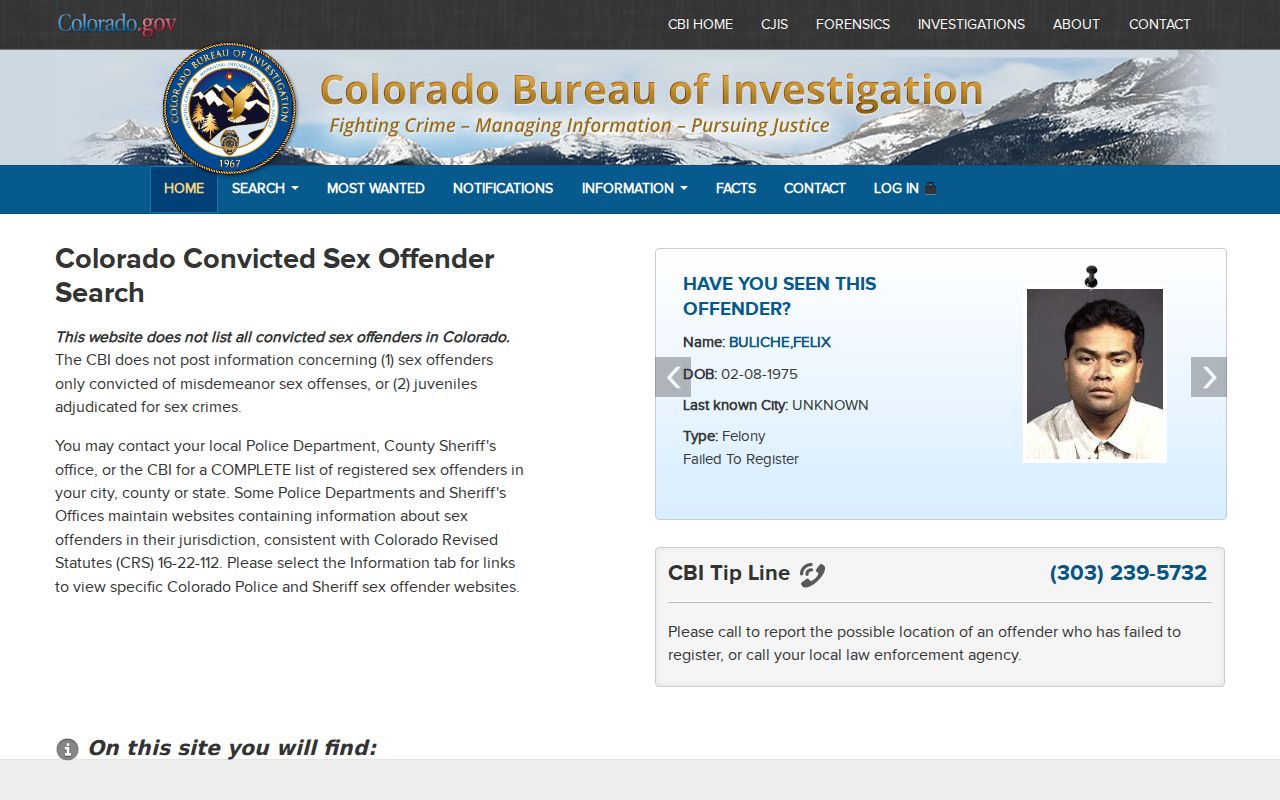
This search form is the correct first stop for Colorado registry records without centering a particular person's identity.
Confirming Dolores County Registration
For local confirmation, contact the Dolores County Sheriff's Office at 409 N. Main Street in Dove Creek or call 970-677-2257. Ask for the sex-offender registration deputy, office hours, and appointment instructions. The research found no published local fee or appointment rule, so calling before travel is important, especially for residents crossing the county's sharp geographic divide.
The sheriff can receive a report of suspected noncompliance and can explain the local channel. Do not confront the person shown. An address may have changed, a report may still be under review, or a legal order may affect the public status. The law-enforcement agency, not a neighbor, determines the next step.
Inside a Registry Profile
A public profile joins identifying traits with registration facts. Fields can vary from one record to another. The result may omit data that is not public or not available for that person. Compare several fields before drawing a conclusion, and keep the difference between a public registry profile and a full court file in view.
| Name and Aliases | Legal name and any public alternate names. |
|---|---|
| Photo and Description | Photograph, sex, race, height, weight, hair, eyes, age data, and marks when published. |
| Registered Location | Address or other location information allowed for public release. |
| Offense | Qualifying offense description, statute, conviction date, and jurisdiction when shown. |
| Category | Colorado status or Sexually Violent Predator designation where applicable, not a made-up federal tier. |
| Status | Registration jurisdiction, compliance information, and update details available on that profile. |
CBI Criminal History Record Information is a separate product. While registration is current, a CBI history report can display “Registered Sex Offender” after demographics and before the arrest and disposition history. That notation does not replace the detail in the public registry.
Beyond Dolores County Records
Use the Dru Sjodin National Sex Offender Public Website, or NSOPW, when the relevant place may lie outside Colorado. It searches participating jurisdictions through one national entry point. Coverage and fields still come from the participating registries, so a national no-result is not proof that no legal history exists.
The national search interface provides the cross-state layer:
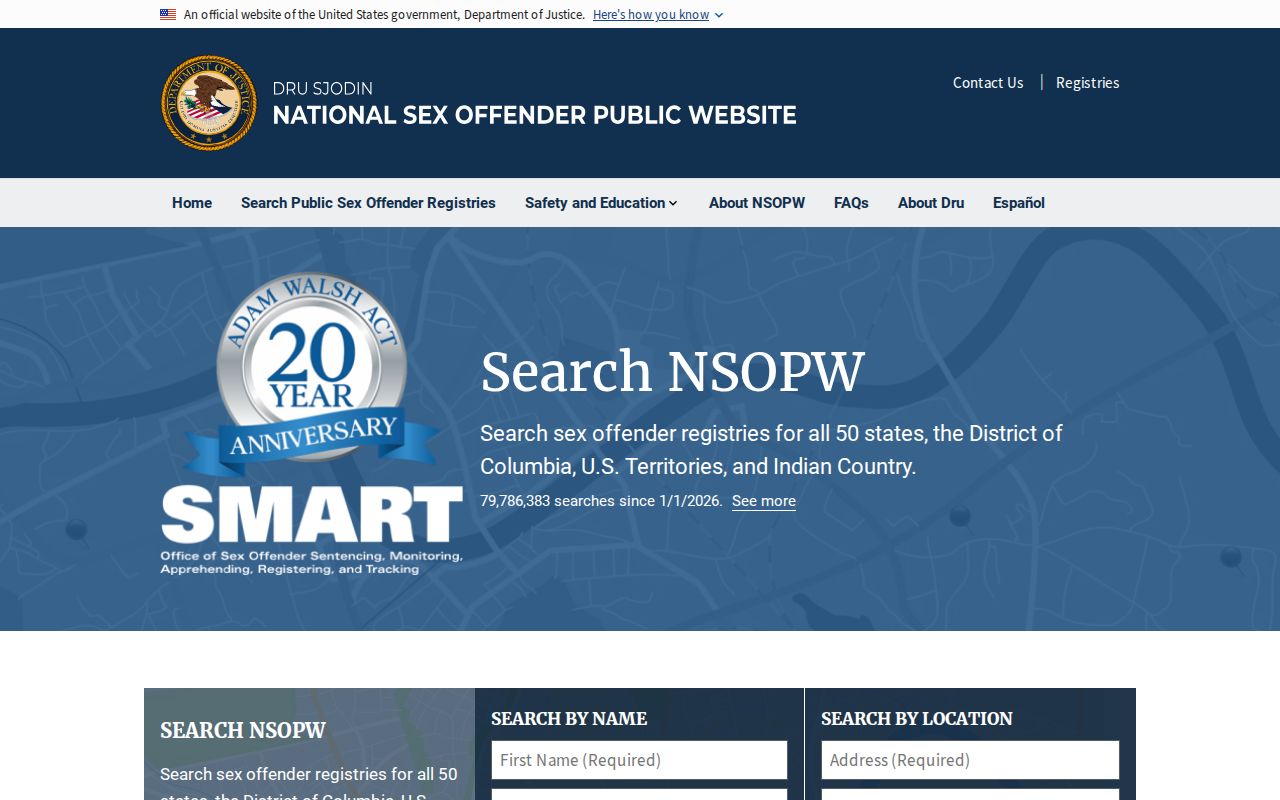
This option is most useful when a move, travel pattern, or former address crosses a state line.
Colorado Registration Levels and Requirements
Colorado registration law distinguishes lifetime categories, adult felony duties, misdemeanor and juvenile categories, and annual or quarterly reporting requirements. C.R.S. § 16-22-108 governs registration frequency and related duties. C.R.S. § 16-22-113 addresses petitions to discontinue in qualifying cases. The live statute and case order control.
| Colorado Category | General Duration | General Frequency |
|---|---|---|
| Sexually Violent Predator and specified categories | Lifetime duties | Heightened verification and notification provisions |
| Adult felony registration categories | Offense-specific; petition only after applicable period | Annual or other statutory schedule |
| Misdemeanor or juvenile categories | Different periods; court action may be needed | Depends on governing category |
| Quarterly registrants | As required by law | Quarterly plus required change reports |
| Other annual registrants | As required by law | Annual plus required change reports |
Registration also includes reporting required changes. A public result can lag a new report or correction. Use the status and last-update information shown, then contact the sheriff if the data appears stale.
Ending a Registration Duty
A person who qualifies to seek discontinuation must use the court process that applies to the statutory category. A petition right is not automatic removal. The judge's signed order matters, and CBI says the person must provide the order to both CBI and the local registration agency.
The CBI Sex Offender Registration Unit publishes forms and program instructions:
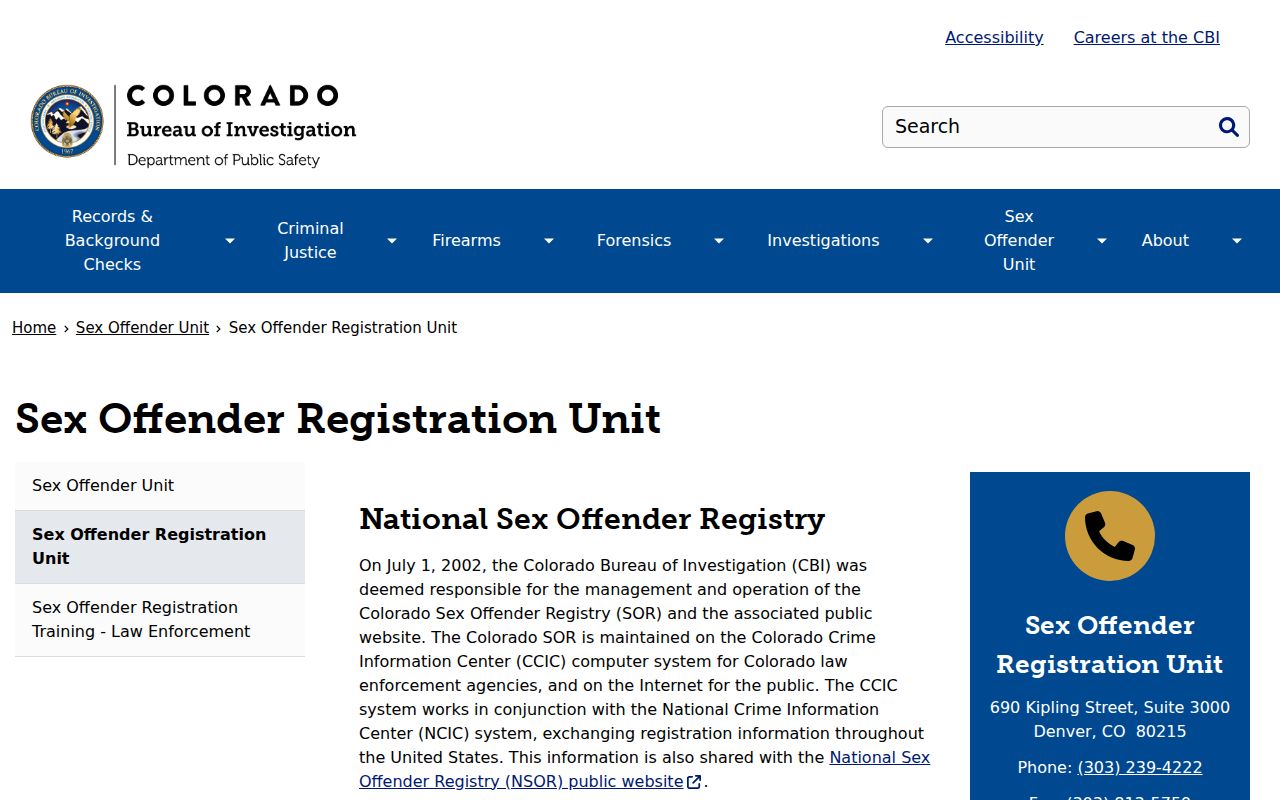
After processing, a later CBI self-review that no longer carries the current registered notation can help confirm that the repository received the change. Old copied pages may persist elsewhere and are not proof that the official record remains unchanged.
Why a Past Case May Not Appear
The registry is narrower than a criminal court search. A historical sex-offense conviction may not appear because the person had no present public registration duty, received an order discontinuing registration, falls under a different release rule, or is registered in another jurisdiction. Conversely, a registry profile does not show every filing, motion, plea detail, or sentence term found in the court case.
For the prosecution record, use Dolores County criminal court cases. For a fingerprint-based Colorado public history, use CBI ICHC through the broader Dolores County criminal history overview. Those channels answer different questions and should not be treated as duplicates.
Community Notification and Lawful Use
Registry data supports informed safety planning and community awareness. It does not authorize retaliation. If a profile seems wrong, save the public details needed to identify the record and call the sheriff or CBI. If conduct suggests an immediate threat, call 911. For suspected failure to register, report the facts to law enforcement and avoid direct contact.
Misuse is prohibited: C.R.S. § 16-22-110 governs public registry release and warns that the information may not be used to inflict injury, harass, or commit a crime against a registrant or household. Misuse can itself lead to criminal penalties.
Address data can change, and a name match can be wrong. Verify the live profile and its warning text before relying on it. A person's legal status must come from the official agency and court records, not from rumor, screenshots, or an old third-party list.
When Registry Details Conflict
Conflicting details call for source checks, not guesswork. Save the profile URL, note its jurisdiction and status, and compare the live update fields with the information in question. A local address may have changed, a report may be pending, or an old copied result may remain after the official record changes. Contact the Dolores County Sheriff's Office about local registration facts and CBI about the state profile.
Do not use a third-party people-search page to settle the conflict. It may have stale data and cannot amend the official registry. A court file can explain the conviction and sentence, while the registry answers whether public registration information is currently released. Keeping those roles separate prevents an old case entry from being mistaken for a current violation.